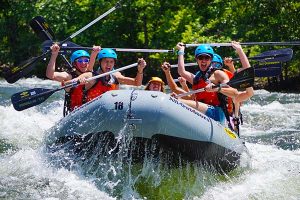
Who Owns A River?
Who really owns a river? It’s a question that has sparked debates for centuries, from California to Colorado and everywhere in between. Property owners, farmers, cities, recreationists, and wildlife all have a stake in flowing water — but when claims collide, whose rights come first?
A well-known dispute in Colorado brought this question into focus. Boaters rallied to defend their right to float the Lake Fork of the Gunnison River after a landowner claimed the water in front of his property belonged solely to him. The case highlighted a broader conflict that has been playing out for decades: do rivers belong to individuals, or to everyone?
A Familiar Struggle
The tension between public access and private property isn’t new. Courts across the country have consistently sided with boaters, anglers, and communities, recognizing that rivers are more than just a backyard feature. Still, every time the issue resurfaces, it forces us to consider what’s fair and sustainable.
Economics teaches us to respect private property rights, but it also reminds us that resources like rivers carry shared value. Block a river in one place and you don’t just affect a single landowner — you disrupt farms, wildlife, recreation, and the health of the watershed downstream.
Lessons from History
California’s own history shows how powerful a single claim could be. During the Gold Rush, settlers could alter entire rivers simply by staking land near their source, with little regard for the communities or ecosystems downstream.
Earlier Spanish law, by contrast, recognized that water use on one property couldn’t diminish water available to others upstream or downstream. It wasn’t perfect — it didn’t fully account for environmental impacts — but it acknowledged a crucial truth: you can’t change a river in one place without affecting the whole system.
Why Rivers Matter to All of Us
A river isn’t just water flowing through land. It carries fish upstream to spawn, provides habitat for countless species, sustains farms and cities, supports recreation, and shapes landscapes. When one person claims exclusive rights, they’re not just taking a resource — they’re affecting an entire community of people, plants, and animals.
A Shared Responsibility
In the end, no one person can truly “own” a river. Too many people, communities, and ecosystems depend on its flow. Rivers are a public good, and they deserve protection that matches their importance.
Keep Reading – There Is More to Explore:

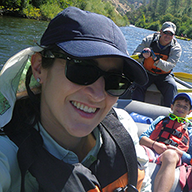
Lenka Bostian
Lenka started working for All-Outdoors in the summer of 2005 when she followed her heart from her native Czech Republic out to California. After graduating college in Prague, she packed up her degree in International Business and moved across the pond for good. She’s been part of the AO family ever since, wearing different hats along the way. Besides trail running, tennis, and traveling, Lenka enjoys rafting and camping on the South Fork with her hubby (former AO guide) and their twin boys.