The 2013 California Rim Fire and the Tuolumne River Recovery
Editor’s Note: This article combines a series of updates originally published during and after the 2013 Rim Fire, which impacted the Tuolumne River and Cherry Creek canyons.
The Rim Fire ignited in August 2013 and would go on to become one of the largest wildfires in California history at the time. What began as a small fire deep inside a wilderness canyon quickly grew into a massive blaze that would ultimately burn hundreds of thousands of acres, threaten Yosemite National Park, force evacuations, and bring the rafting season on the Tuolumne River and Cherry Creek to an abrupt end.
For those of us who spend our summers on these rivers, the fire was more than a headline. We watched it unfold from the edge of the canyon, helped neighboring outfitters evacuate as flames approached, and spent months wondering what would remain when we finally returned.
This is the story of the Rim Fire’s impact on the Tuolumne River canyon and the remarkable recovery that followed.
The Fire Arrives
On August 17, 2013, a small fire started in the Clavey River drainage, just north of the Tuolumne River canyon. At first, it didn’t seem especially threatening.
Coincidentally, All-Outdoors owners Gregg and Scott Armstrong were in the area hosting a small gathering of rafting outfitters from around the country that was scheduled to conclude with a three-day trip on the Tuolumne River. As the group headed toward the put-in on the morning of August 18, passing the Rim of the World overlook along Highway 120, they noticed a small column of white smoke rising from where the fire had started. Aircraft were already dropping retardant, and it appeared that firefighters would soon have the situation under control. Expecting the fire to be contained quickly, the group postponed the start of the river trip until the following morning.
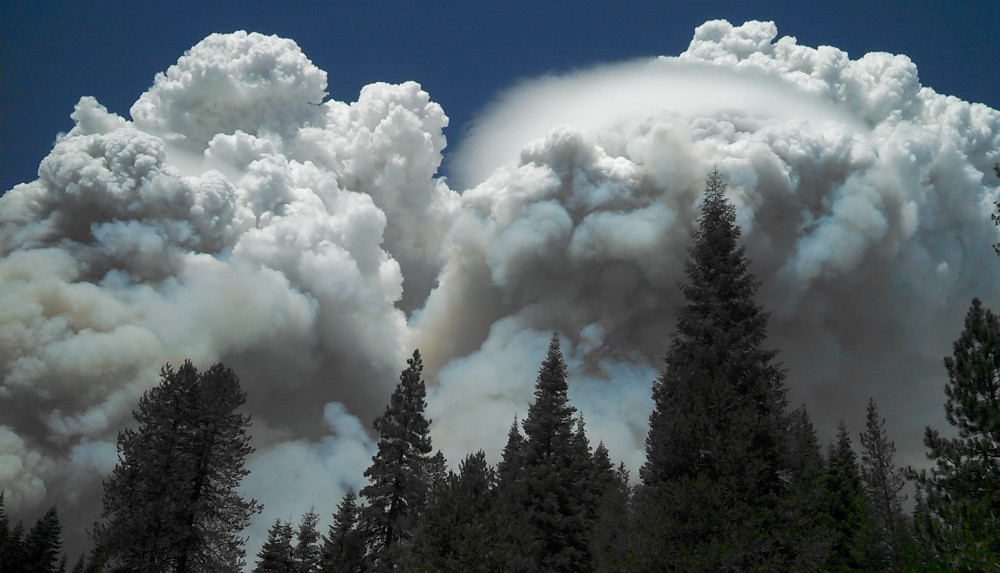
That assumption would not last long. Within days, the fire exploded in size. What had been a relatively small wildfire grew into a fast-moving blaze that crossed ridgelines, entered Yosemite National Park near Hetch Hetchy Reservoir, and threatened communities throughout the region.
As the fire spread, roads into the canyon were closed so emergency crews could move freely through the area. When the fire crossed the Tuolumne River and reached the heavily forested south side of the canyon, conditions changed dramatically. Smoke darkened the sky, ash began falling, and it became clear that everyone in the area needed to leave.
A Front-Row Seat to a Historic Fire
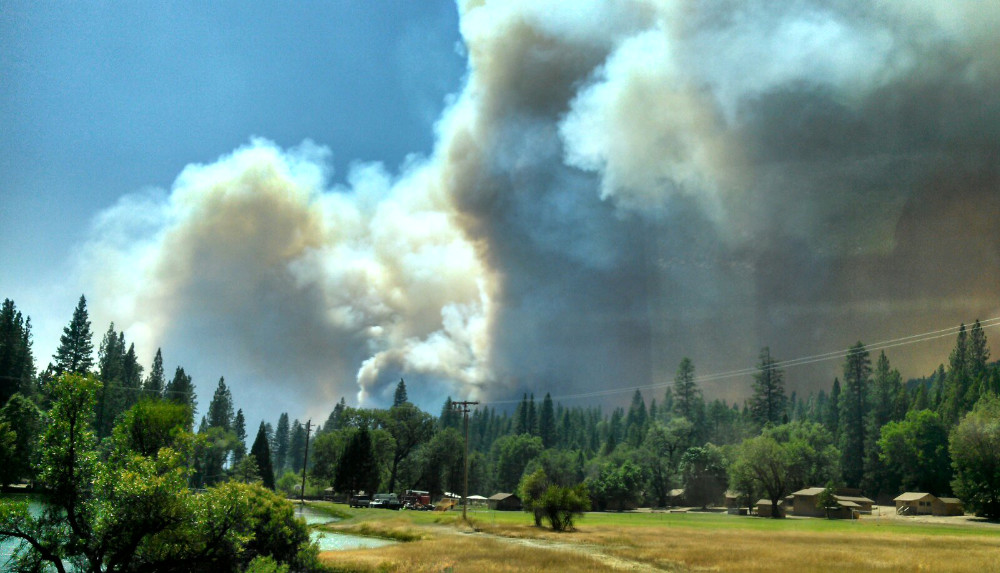
The group of outfitters was staying in Buck Meadows, just east of Groveland, a community that would eventually find itself directly in the fire’s path. As the threat grew, evacuations began.
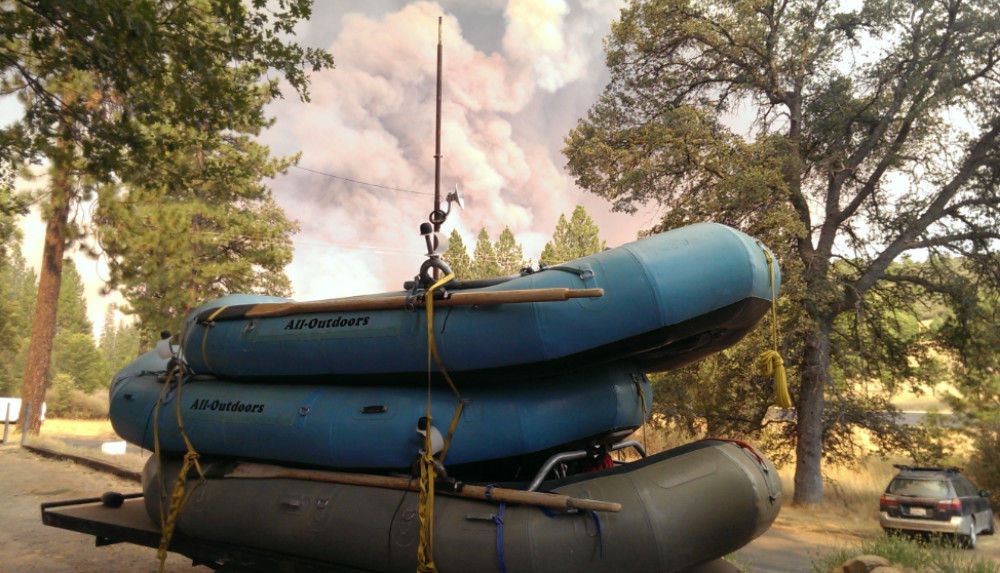
While some headed out of the area, Gregg and Scott joined others in moving rafting equipment, relocating vehicles, and helping neighboring outfitters prepare for possible evacuations. As conditions deteriorated, firefighters ordered everyone to leave with only minutes to spare.
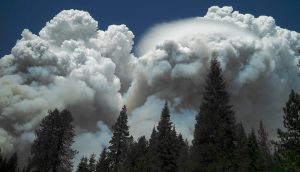
The Rim Fire continued to grow. It had crossed Highway 120 and was generating smoke columns so massive they resembled thunderheads. The fire burned so hot that it created its own weather, producing thunder and ash-filled rain beneath towering clouds of smoke.
For days, we could do little more than watch. The small fire first spotted from the highway had transformed into a historic wildfire that consumed vast stretches of forest and would undoubtedly change the landscape surrounding the Tuolumne River canyon.
How Much Damage Did the River Canyon Sustain?
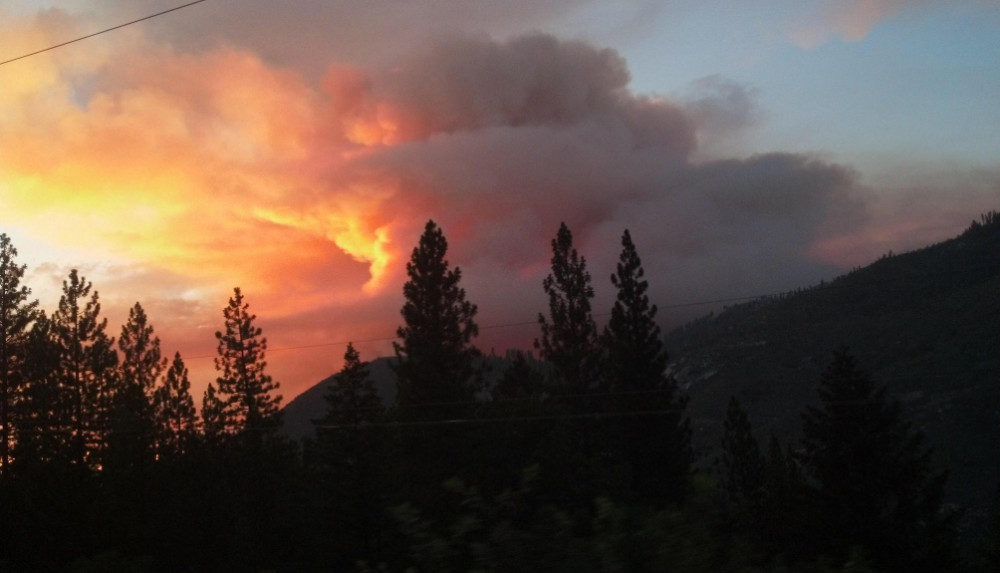
The Tuolumne River corridor appeared to have sustained fire damage of varying degrees. Some areas burned intensely, while others were surprisingly untouched. As the fire moved upstream, the Cherry Creek / Upper Tuolumne section appeared to have suffered more extensive impacts.
Because access roads were closed, it was impossible to fully assess conditions inside the canyon. With only a few weeks remaining in the rafting season, all remaining Tuolumne River and Cherry Creek trips were canceled.
The greatest unknown was what the canyon would look like once the fire was finally out. While reports and aerial views offered some clues, nobody had been able to fully evaluate the damage from the ground level.
Over the decades of operating rafting trips on rivers throughout California, we had seen fire affect river canyons before. These landscapes are remarkably resilient, and river ecosystems often recover much more quickly than the surrounding forests. Until we could return and see the canyon for ourselves, we could only hope the Tuolumne would prove no different.
Returning to the Canyon
Several months later, in January of 2014, we finally had an opportunity to return. Working alongside the U.S. Forest Service, All-Outdoors owner Scott Armstrong was invited to visit the canyon while crews continued repairing and stabilizing access roads damaged by the fire.
The landscape had clearly been transformed. The contrast between burned and unburned areas was striking. Some hillsides appeared barren and brown, while pockets of vegetation had somehow escaped the flames entirely. From the canyon rim, the damage seemed overwhelming.
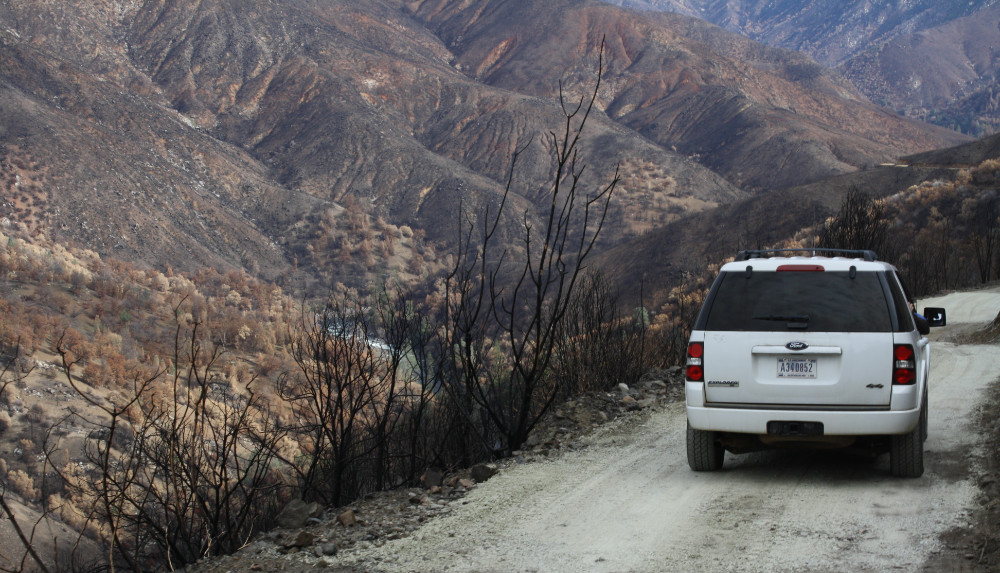
Yet there were already signs that recovery had begun. With the arrival of winter rains, grasses and smaller vegetation were expected to rebound quickly. The larger trees – pines, oaks, and manzanita – would require years or decades to fully recover, but the process was already underway. One unexpected observation drew a few smiles: poison oak populations appeared to have been significantly reduced in many areas.
The River’s Remarkable Recovery
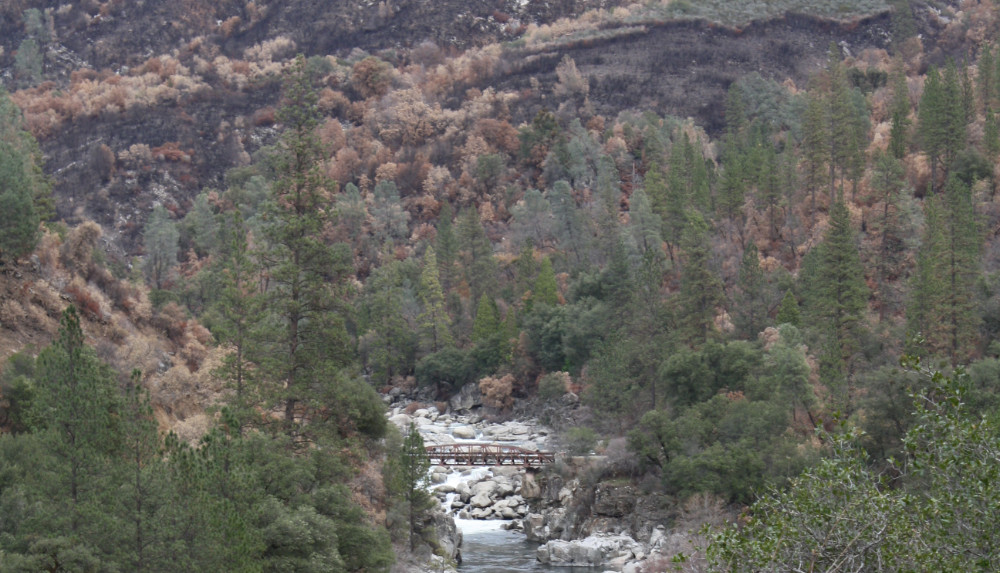
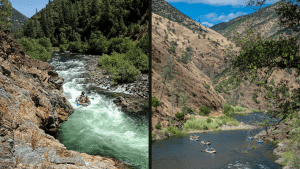
In late March of 2014, we finally returned to the canyon by raft. Representatives from the U.S. Forest Service, water agencies, and the Tuolumne River outfitters joined together to see firsthand what the river looked like after the fire.
Nobody knew what to expect. What we found surprised us. The fire damage was unmistakable. Charred trees and blackened slopes lined portions of the canyon. From above, the landscape still looked heavily scarred. But at river level, a different story emerged.
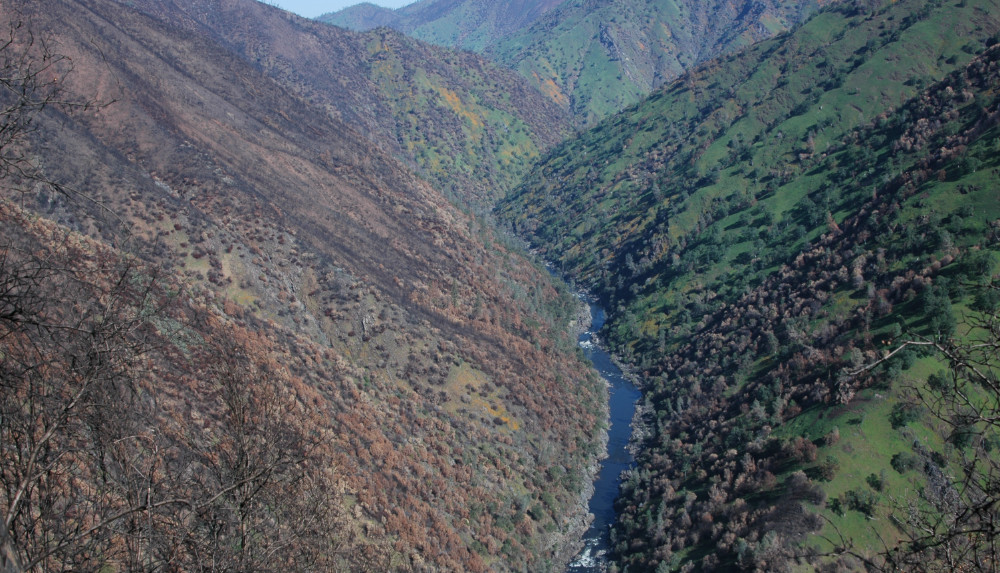
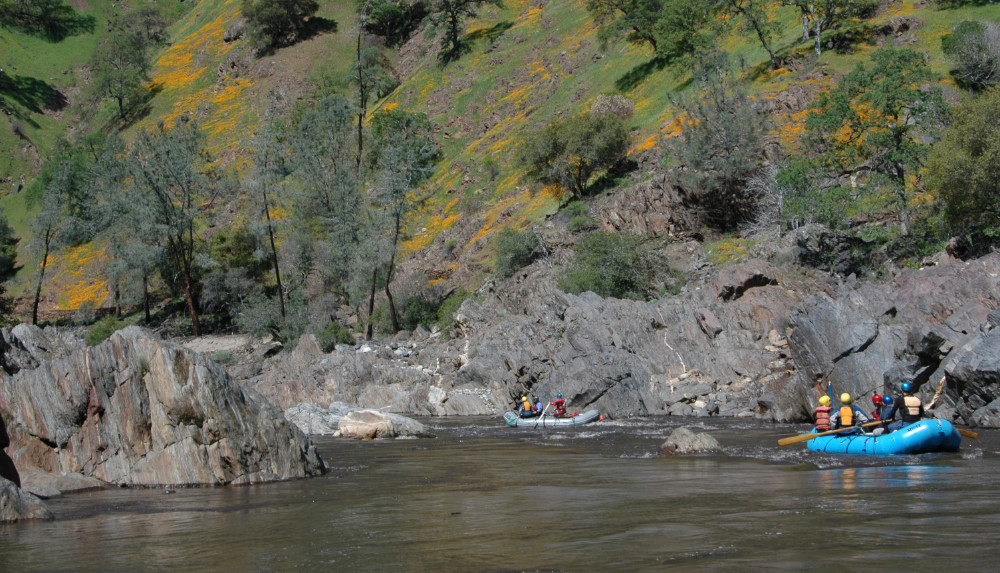
Spring growth was already returning. Bright green vegetation contrasted sharply against burned hillsides. Wildflowers appeared in places that had seemed lifeless only months earlier. The river itself remained every bit as beautiful and powerful as before. The canyon had changed, but it had not been destroyed.
Looking Back
Today, more than a decade later, visitors can still find evidence of the Rim Fire throughout portions of the Tuolumne River canyon and on Cherry Creek. The fire left a lasting mark on the landscape, and some of the largest trees lost in 2013 will take generations to replace. Yet the story of the Rim Fire is not ultimately one of destruction. It is a story of resilience.
The Tuolumne River continues to deliver the same world-class whitewater, dramatic scenery, and wilderness experience that have long made it one of California’s most celebrated rafting destinations. Along the way, the canyon also provides a living reminder of how wild landscapes respond, adapt, and recover after major natural events.
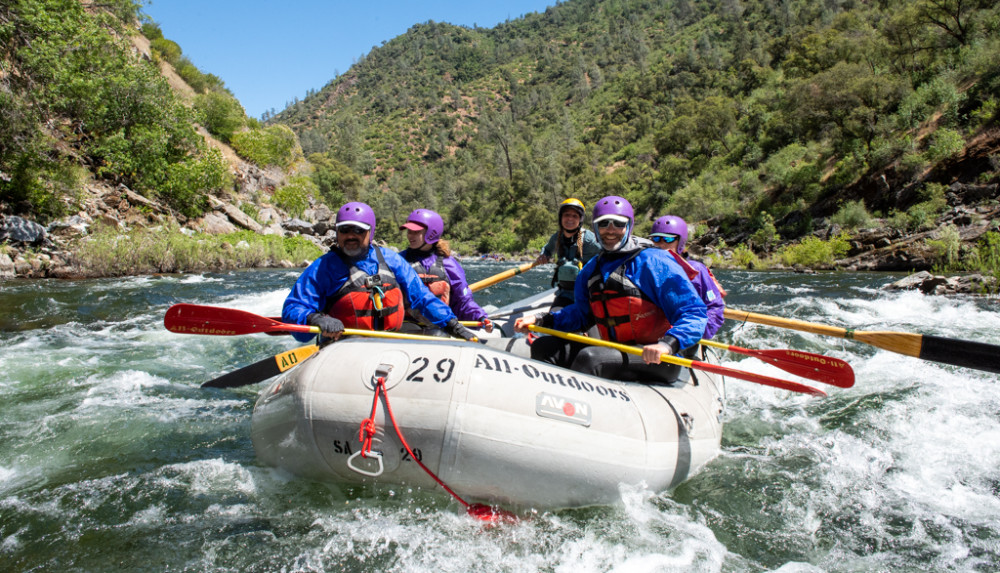
Raft the Cherry Creek / Tuolumne Combo!
This could be you! Experience world-class whitewater and a stunning, remote canyon as you start on Cherry Creek / Upper Tuolumne and continue down to the main Tuolumne section in one continuous trip. It’s the ultimate multi-day adventure!
Keep Reading – There Is More to Explore:
Lenka Bostian
Lenka started working for All-Outdoors in the summer of 2005 when she followed her heart from her native Czech Republic out to California. After graduating college in Prague, she packed up her degree in International Business and moved across the pond for good. She’s been part of the AO family ever since, wearing different hats along the way. Besides trail running, tennis, and traveling, Lenka enjoys rafting and camping on the South Fork with her hubby (former AO guide) and their twin boys.